

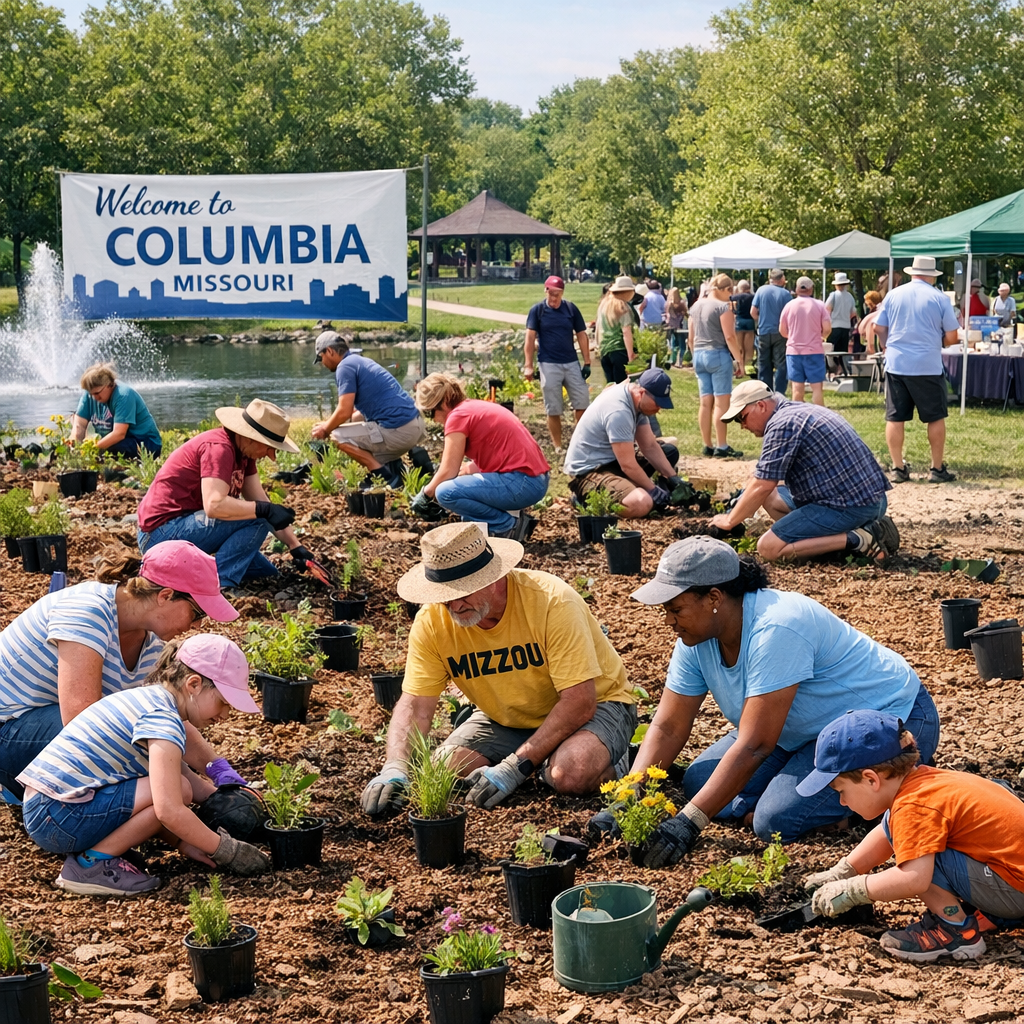
Columbia, Missouri, is actively addressing climate change through a series of community-driven initiatives and sustainable practices. These efforts aim to mitigate environmental impacts and enhance the city’s resilience.
Climate Action and Adaptation Plan (CAAP)
In June 2019, Columbia adopted the Climate Action and Adaptation Plan (CAAP), setting ambitious goals to reduce greenhouse gas emissions. The plan targets a 35% reduction by 2035, 80% by 2050, and achieving net-zero emissions by 2060. For municipal operations, the goals are a 50% reduction by 2035 and net-zero by 2050. The CAAP outlines strategies across various sectors, including energy, transportation, and waste management, to achieve these objectives.
Office of Sustainability
Established in 2010, the Office of Sustainability leads Columbia’s environmental initiatives. The office collaborates with city departments and the community to improve resource efficiency and promote environmental stewardship. Key responsibilities include conducting annual greenhouse gas inventories, implementing educational programs, and overseeing projects like the Roadside Pollinator Program, which converts mowed turfgrass areas into native prairie vegetation to support pollinators and reduce maintenance costs.
Community Programs and Education
Columbia offers various programs to engage residents in sustainability efforts. The CoMo Wild Yards Program assists landowners in restoring native plant and animal habitats on their properties, enhancing biodiversity and building resilience to climate change. Additionally, the city provides educational presentations on recycling, composting, and waste reduction to schools and community groups, fostering environmental literacy among residents.
Urban Heat Island Effect and Mitigation
The city recognizes the challenges posed by the Urban Heat Island (UHI) effect, where urban areas experience higher temperatures than surrounding rural regions due to heat-absorbing surfaces and limited vegetation. To address this, Columbia launched the “Show Me the Heat” program, focusing on identifying and mitigating heat-prone areas through increased tree planting and the promotion of green infrastructure.
Renewable Energy Goals
Columbia is committed to increasing its renewable energy usage. As of early 2026, the city achieved over 22% renewable energy consumption, with plans to reach 30% by 2029. Efforts include investing in renewable energy projects and overcoming challenges such as legal hurdles related to transmission line projects.
Individual Actions and Community Involvement
Residents can contribute to Columbia’s sustainability goals by incorporating native Missouri plants into their home landscapes. Native plants have deep root systems that absorb stormwater, reducing runoff and erosion. They also provide habitat for local wildlife and require less maintenance than non-native species. The city offers resources and guidance for residents interested in creating native plant gardens.
Through these comprehensive efforts, Columbia continues to demonstrate its commitment to environmental stewardship and community resilience in the face of climate change.